
The Problem: Volume Multiplies Risk, Not Just Results
Look at how a typical rep actually spends their day. A chunk of it goes to dialing numbers that never connect. Another chunk goes to leaving the same voicemail, word for word, over and over, one contact at a time. Then there's the follow-up: checking who might have listened, deciding who to call back, texting the ones who seem promising — all done manually, all pulling a rep away from live conversations with people who are ready to talk right now.
None of that is selling. It's administrative overhead disguised as prospecting, and it scales in exactly the wrong direction: the bigger your list gets, the more hours it eats, and the less time your best people spend doing the one thing that actually moves revenue.
Why Just Adding More Tools Doesn't Fix It
The instinct is to patch each problem separately — a dialer for volume, a spreadsheet for compliance tracking, a separate reporting tool to satisfy clients. But stitching together point solutions doesn't reduce risk; it multiplies the number of places something can go wrong, and the number of logins your team has to manage per client. What agencies actually need is a single channel that's compliant by design, easy to segment by client, and transparent enough to hand a client a report without extra work.
A Smarter Outbound Marketing Channel: Ringless Voicemail
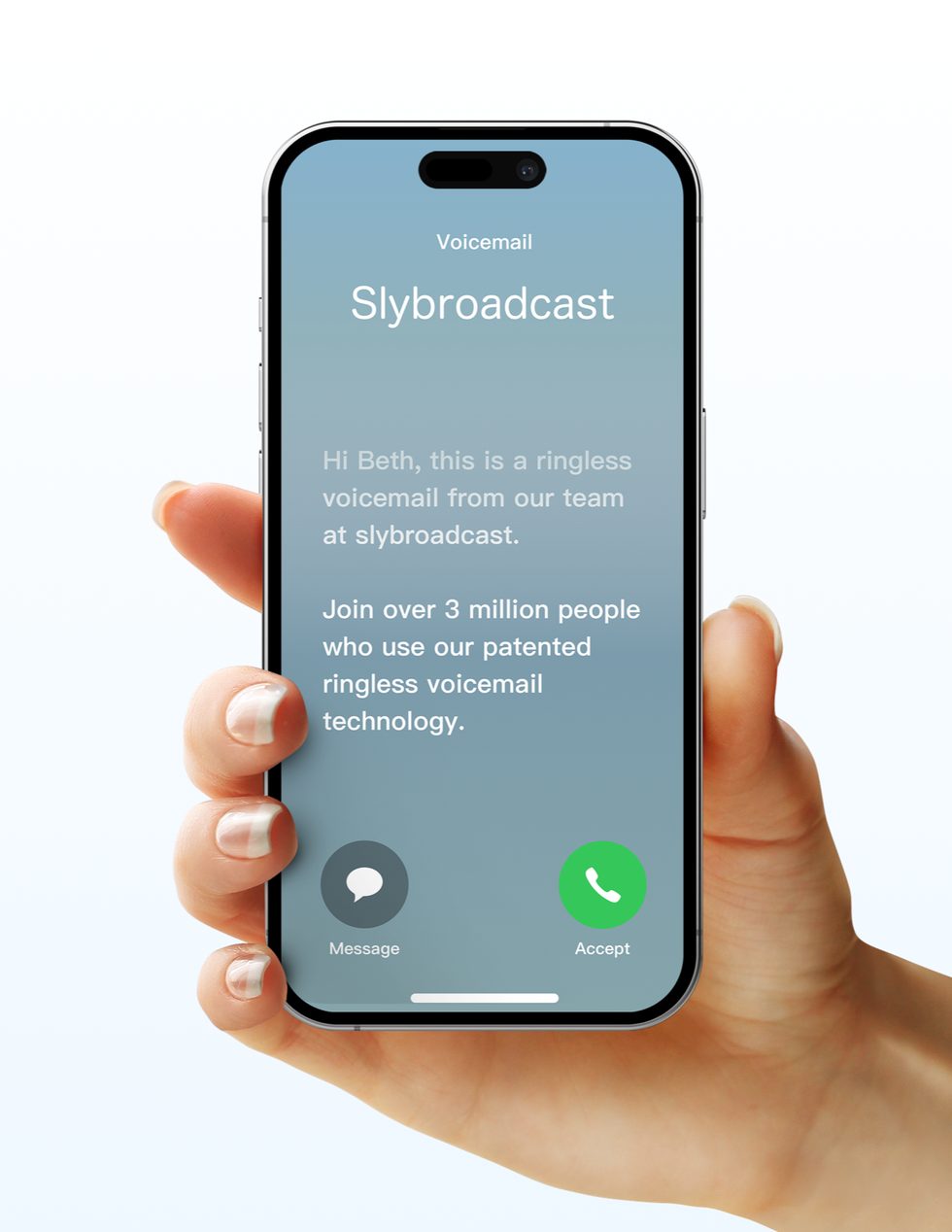
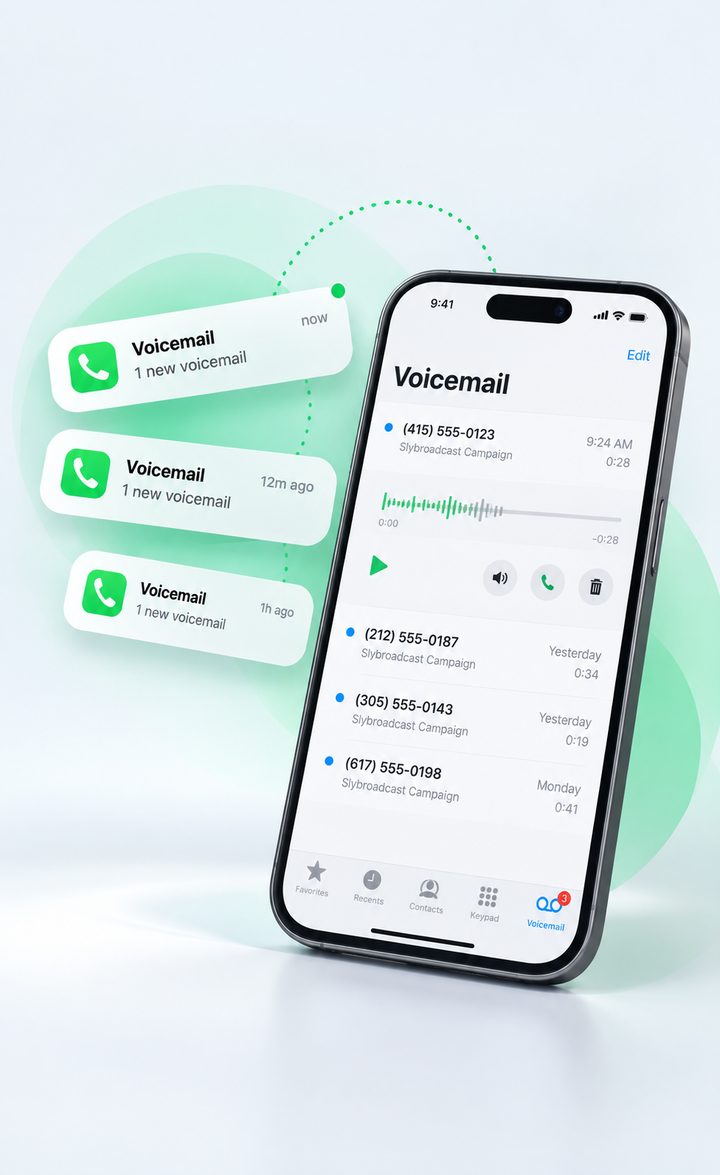
Of all the outbound marketing channels available to agencies — cold calling, SMS, email, ringless voicemail — most carry the same tradeoff: the more volume you push through them, the more compliance and deliverability risk you take on. Ringless voicemail delivers a prerecorded message directly into a contact's voicemail inbox, with no ring and no live call. For agencies, that matters beyond the recipient experience: because it doesn't rely on live dialing or two-way texting threads, it's a channel built to be tracked, scheduled, and reported on cleanly — campaign by campaign, client by client — without the flagging and throttling issues that plague high-volume calling and SMS.
It's also a channel your clients will immediately understand the value of: a real voice message, landing directly where prospects check it, at a scale no manual outreach effort could replicate. And because every send is scheduled and logged rather than dialed live by a person, you have a clean audit trail for every campaign — which number sent what, to which list, and when — instead of having to reconstruct that history after a client asks for it.
Where Ringless Voicemail Fits Among Your Outbound Marketing Channels
Every agency runs some version of the inbound vs. outbound marketing debate internally, and the honest answer is that most client accounts need both. Inbound work — content marketing, SEO and search engine optimization, social media marketing, webinars, and the kind of case studies that build trust before a prospect ever picks up the phone — brings people to you over time. Outbound marketing strategies do the opposite: they put your client's message in front of an ideal customer profile (ICP) on your timeline, not the prospect's. Ringless voicemail belongs firmly in the second category, alongside the rest of the outbound marketing tactics agencies already run: cold email, cold calling, direct mail, and increasingly, LinkedIn and LinkedIn ads aimed at the same list.
The traditional marketing channels haven't disappeared either — billboards, radio ads, postcards, and a presence at trade shows and events still generate qualified leads for the right client, especially paired with lead generation efforts running elsewhere. What's changed is how those channels get sequenced. A prospect who saw a billboard, then a LinkedIn ad, then received a ringless voicemail is moving through a buyer's journey that agencies used to have to guess at; now each of those outbound strategies can be tracked and attributed to the same contact record.
None of this means every client needs every channel. It means ringless voicemail earns its place in the mix specifically where cold email and cold calling are losing effectiveness — the exact gap described above — while the client's other outbound marketing strategies (paid ads, social media ads, display ads, influencer marketing, podcasts) continue running in parallel rather than being replaced.
Measuring and Refining the Channel Mix
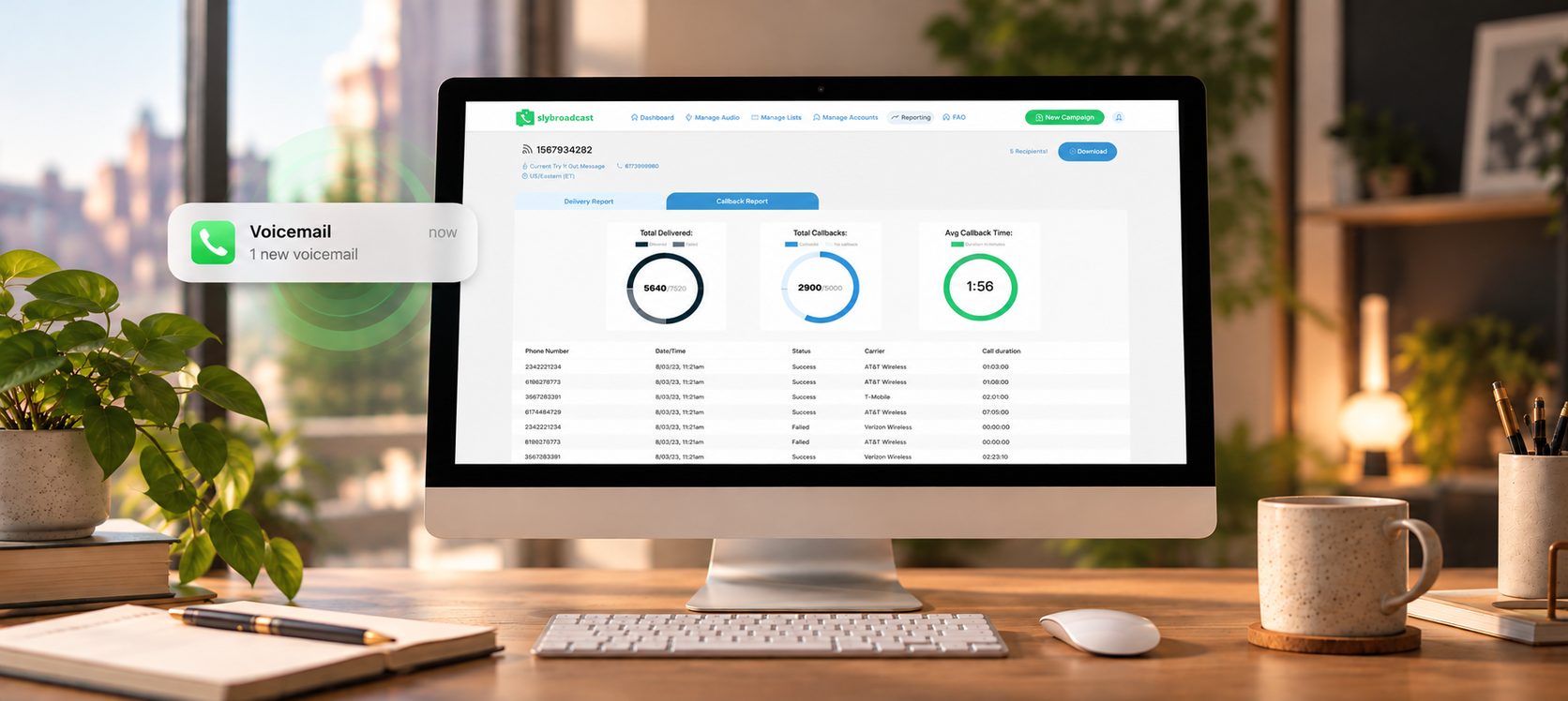
Agencies justify budget by what they can measure, and that discipline should apply to ringless voicemail the same way it applies to everything else in the plan. Market research and a clearly defined ICP inform which channels get funded in the first place; from there, Google Ads, PPC, and search engine marketing report on click and conversion data through Google Analytics, while email marketing and email campaigns get judged on opens and replies. Ringless voicemail's version of that same reporting is Callback Analytics and real-time delivery tracking — a client-ready number that sits next to the paid advertising metrics in the same report.
The same testing discipline applies too. Just as a paid search campaign gets refined with A/B testing on ad copy, a ringless voicemail campaign improves by testing scripts, Caller IDs, and send times against each other and keeping what drives more callbacks. Treating it as one more measurable line item — not a mysterious add-on — is what makes it easy for an agency to defend inside a broader outbound marketing strategies review.
What Makes Slybroadcast Different for Agencies
Slybroadcast is built with the infrastructure agencies need to run this responsibly across many accounts at once:
- Compliance built in, not bolted on — SOC 2 and PCI compliant, with a HIPAA-compliant option for healthcare clients, and built to operate within TCPA and Do Not Call Registry rules — so you can tell every client, honestly, that the channel is built for compliance.
- Unlimited campaigns and recordings — Keep every client's messages, lists, and campaign history separate and organized, with no cap on how many you run or store.
- Real-time delivery reporting — Hand clients proof of outreach as it happens instead of assembling reports after the fact from multiple systems.
- Callback Analytics per campaign — Assign a callback number as the Caller ID for each client's campaign and show them exactly how many prospects called back — a concrete, client-ready result.
- Custom Caller ID control — Choose which number appears for each client's campaign, keeping outreach properly attributed and consistent with what that client's prospects expect to see.
- API access on every account — Build custom workflows that plug ringless voicemail directly into your own agency tooling, at no extra cost.
- Native integrations for every client's stack — Zapier, Make, Salesforce, and Integrately connect campaigns to whatever CRM each client already uses, and the Zapier integration alone covers most major CRMs — so you're not forcing every client onto the same system.
- Custom and invoiced plans — Volume pricing built for agencies running outreach across multiple accounts, rather than a single-user plan stretched past its limits.
How It Works
- Set up each client as its own campaign structure — separate lists, separate recordings, separate Caller ID.
- Record or generate the message — by phone, by upload, or with text-to-speech, per client or per campaign.
- Schedule and send — immediately, in batches, or on a future date, per client's needs.
- Report with real data — real-time delivery tracking and callback analytics, ready to hand to the client as-is.
Scale Without the Exposure
This isn't a platform you have to explain away to a compliance-conscious client. It's SOC 2 and PCI compliant, HIPAA-compliant options are available, and it's built around TCPA and Do Not Call Registry rules from the ground up. Pricing scales from pay-as-you-go plans (100 delivered voicemails for $12, up to 10,000 for $450) through monthly plans and custom, invoiced pricing for agencies running high volume across multiple clients — plus a money-back promise on your first campaign and a referral program worth 100 free message credits per side.
Pricing
$12
per 100 delivered voicemails, pay-as-you-go
Pricing
$450
for 10,000 delivered voicemails, pay-as-you-go
Compliance
SOC 2
and PCI compliant, with a HIPAA-ready option
Compliance
TCPA
and Do Not Call Registry aligned
Grow Your Client Roster Without Growing Your Risk
The agencies that scale outbound successfully aren't the ones working harder inside a stack of disconnected tools — they're the ones running it through a channel built for volume, compliance, and clean reporting from day one.