
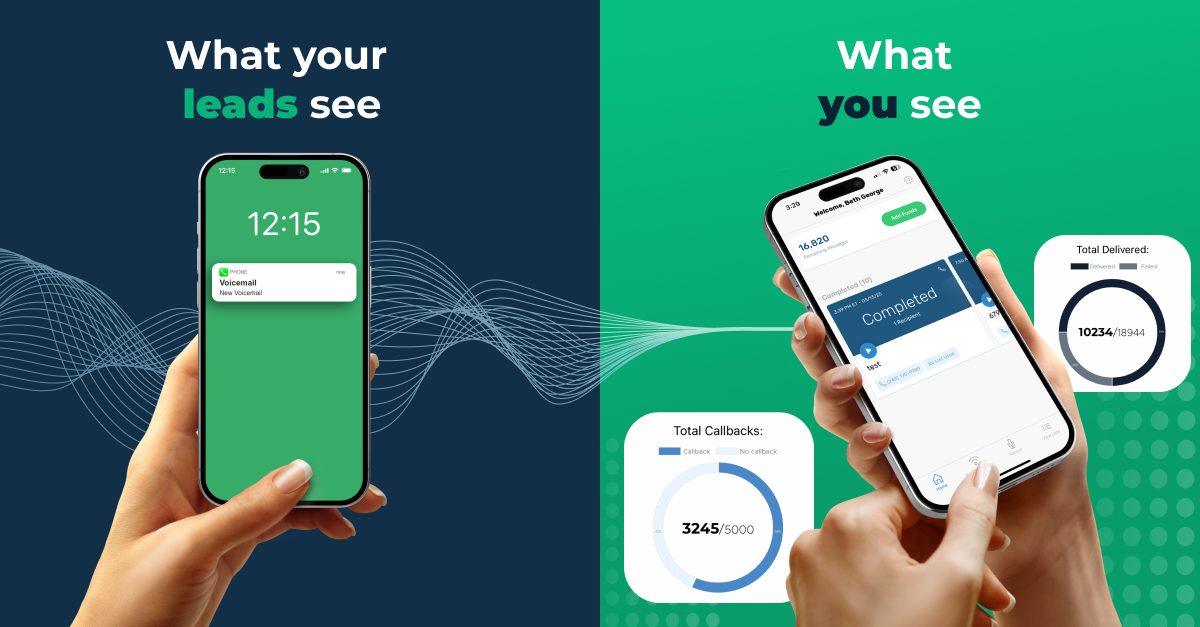
Look at how a typical rep actually spends their day. A chunk of it goes to dialing numbers that never connect. Another chunk goes to leaving the same voicemail, word for word, over and over, one contact at a time. Then there's the follow-up: checking who might have listened, deciding who to call back, texting the ones who seem promising — all done manually, all pulling a rep away from live conversations with people who are ready to talk right now.
None of that is selling. It's administrative overhead disguised as prospecting, and it scales in exactly the wrong direction: the bigger your list gets, the more hours it eats, and the less time your best people spend doing the one thing that actually moves revenue.
Why Hiring More Reps Doesn't Solve It
The usual answer to “our team can't get through enough contacts” is to add headcount. But more reps manually dialing and leaving voicemails one by one doesn't fix the underlying inefficiency — it just multiplies it. You end up paying more people to do the same repetitive, low-leverage work, when the actual bottleneck was never the number of people. It was the process: reaching contacts one at a time, by hand, with no way to separate the people worth calling back from the ones who'll never respond.
What sales teams actually need is a way to reach an entire list at once, with a message that still sounds personal, and a system that tells reps exactly who to call back — so the humans on your team spend their hours on conversations, not on dialing.
Think about the math on a 500-contact list. Dialed and left one at a time, that's hours of a rep's day gone before a single callback comes in. Sent as one broadcast, it's minutes.
The Outbound Marketing Tool: Ringless Voicemail Broadcasting
Ringless voicemail broadcasting sends a prerecorded message directly into a contact's voicemail inbox, to your entire list at once, with no ring and no live call required on your end. Instead of a rep manually dialing and leaving the same message hundreds of times, one recording reaches every contact on the list in a single send — freeing up every one of those individual dial-and-leave cycles a rep would otherwise burn a day on.
The message still lands like a real voicemail from a real person, because it is. It's just delivered at a scale no manual dialing effort could match, and it hands your team a clear signal for where to spend their time next: whoever calls back.
Where Ringless Voicemail Fits in Your Outbound Sales Stack
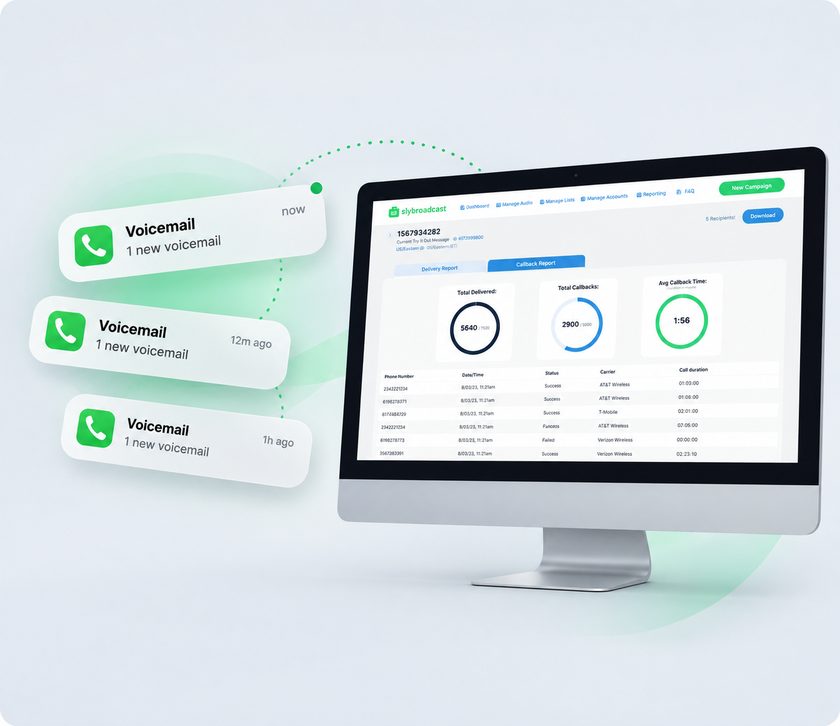
Most sales teams aren't short on outbound sales tools — they're short on time to use them all well. Between a CRM like Salesforce, HubSpot, or Pipedrive, a sales engagement platform such as SalesLoft or Reply.io, email in Gmail, and Calendly for booking time, reps are already juggling more tabs than conversations. Adding ringless voicemail isn't meant to be one more disconnected system. With CRM integration and CRM sync through Zapier, Make, or the API, a completed voicemail drop and a callback can log straight back into HubSpot Sales Hub or Salesforce as an activity, right alongside the email sequences and cold email your team is already running.
That matters because outbound rarely wins on one channel alone anymore. The reps hitting number are running multichannel outreach — multichannel sequences that mix cold calls, cold outreach, email automation, and LinkedIn outreach through LinkedIn Sales Navigator, with social selling filling the gaps in between. Ringless voicemail slots into that sequence as the touch that doesn't need a human to trigger it: it can fire alongside an email sequence step or after a cold call goes unanswered, without adding a manual task to anyone's day.
Whether the goal is straightforward lead generation or something more specific — filling a narrow segment of outbound campaigns for a new territory — the same rule holds: outbound sales software should make the list move faster, not slower. Some teams layer in conversation intelligence to review how those follow-up calls actually go once the voicemail creates the opening, and email marketing keeps running in the background as its own channel rather than the only one.
It also feeds the parts of the process that happen after the send. Callback Analytics gives reps a form of call logging and lead scoring in one place — who responded, who's worth prioritizing — while real-time delivery reporting supports forecasting on what a given campaign is actually likely to produce. None of this requires an AI agent bolted on top or a new layer of automation depth your team has to learn; it's a single channel that plugs into the stack you already run, shortens lead qualification, and keeps the sales cycle moving without more headcount. A/B testing different scripts across sends works the same way it does in any other sales engagement motion — record two versions, see which gets more callbacks, and standardize on the winner.
Better Lists In, Better Callbacks Out
Ringless voicemail is only as good as the list behind it, and most of that list quality now comes from data enrichment before a name ever reaches a campaign. Teams pulling contacts from ZoomInfo, Apollo.io, Clay, Cognism, or a provider like Diamond Data are already doing lead enrichment and waterfall enrichment — stacking multiple data sources so a record still resolves to a working number even when the first source comes up empty. That same data usually carries firmographic detail (company size, industry) and technographic detail (what tools a prospect's company already runs), which makes segmentation against your ideal customer profile far more precise than a generic list ever could.
The sharper version of that targeting layers in intent data and intent signals — buying signals like a company researching a category, expanding a team, or showing up in a trigger-based list — so the voicemail goes out while the timing is actually good, not just when the list happens to be uploaded. None of that changes how Slybroadcast sends the message; it just means the list feeding it is doing more work before the first voicemail ever lands.
What Makes Slybroadcast Different
Slybroadcast is built specifically to take the manual work out of high-volume outreach:
- Thousands of drops in minutes — send an entire campaign's worth of voicemails to mobile numbers across the US and Canada in the time it would take one rep to dial a fraction of that list.
- Unlimited campaigns, unlimited recordings, no per-rep bottleneck — run as many campaigns and store as many messages as you need — the platform scales with your list, not your headcount.
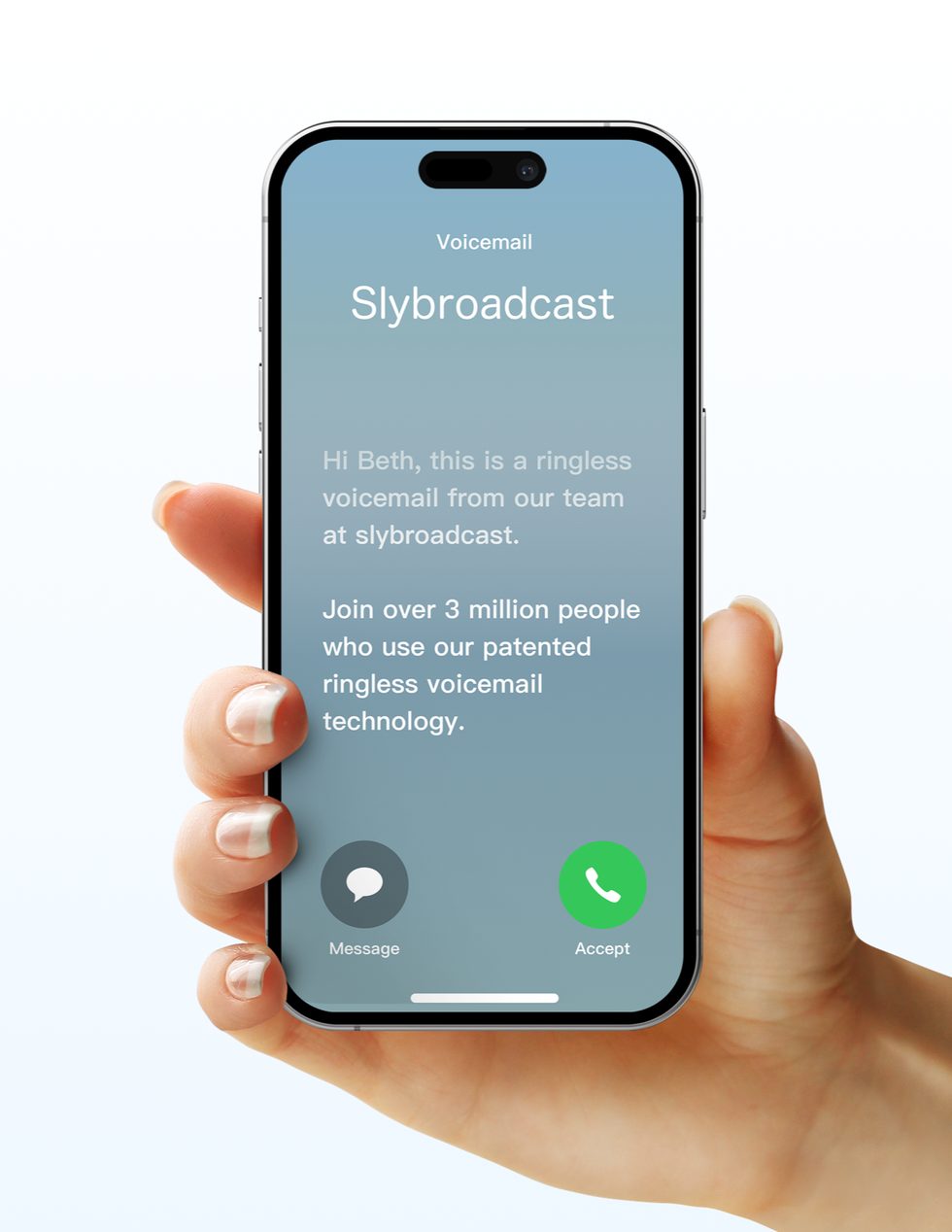
- AI Voicemail Personalization — Slybroadcast's AI can clone your voice and automatically drop each contact's first name into the message, so a broadcast to a thousand people still sounds like one-to-one outreach — without a rep recording it a thousand times.
- Flexible scheduling that runs itself — send immediately, stagger sends in batches, or schedule campaigns for a future date and time, so outreach keeps moving even when your team is focused on live calls.
- Callback Analytics tell reps exactly who to call — set a callback number as your Caller ID and see in real time who responded — so reps spend their limited hours on warm callbacks instead of guessing who might pick up.
- Follow-up Texting closes the loop automatically — the moment a voicemail lands, a follow-up text can go out automatically, giving contacts a way to reply or book time without a rep lifting a finger.
- Manage it from anywhere — iOS and Android apps let managers and reps send drops, record messages, and check campaign status without being tied to a desk.
How It Works
- Upload your contact list once — no size limit, no per-contact manual entry.
- Record or generate one message — by phone, by upload, or with text-to-speech.
- Schedule the send — now, in batches, or for a future date, and let it run.
- Let callback analytics route the follow-up — your reps only spend time on people who responded.
Built to Handle Volume Responsibly
Scaling outreach shouldn't mean scaling compliance risk or losing oversight of your campaigns. Slybroadcast is SOC 2 and PCI compliant, offers a HIPAA-compliant option, and operates within TCPA and Do Not Call Registry guidelines. Pricing runs from 100 delivered voicemails for $12 pay-as-you-go, or monthly plans starting at $8/month, with custom volume pricing available — plus a money-back promise on your first campaign and a referral program that earns both sides free message credits.
Pricing
$12
per 100 delivered voicemails, pay-as-you-go
Pricing
$8/mo
starting price on monthly plans
Compliance
SOC 2
and PCI compliant, with a HIPAA-ready option
Compliance
TCPA
and Do Not Call Registry aligned
Give Your Reps Their Time Back
The goal was never to make your team dial faster. It was to get them talking to people who actually want to talk back. Ringless voicemail from Slybroadcast reaches your whole list without a single manual dial, and tells you exactly where to focus next.